Decoding Regional Variations in Mobile Roulette Engagement During Off-Peak Hours
Written by Ulrich Beck · May 22, 2026
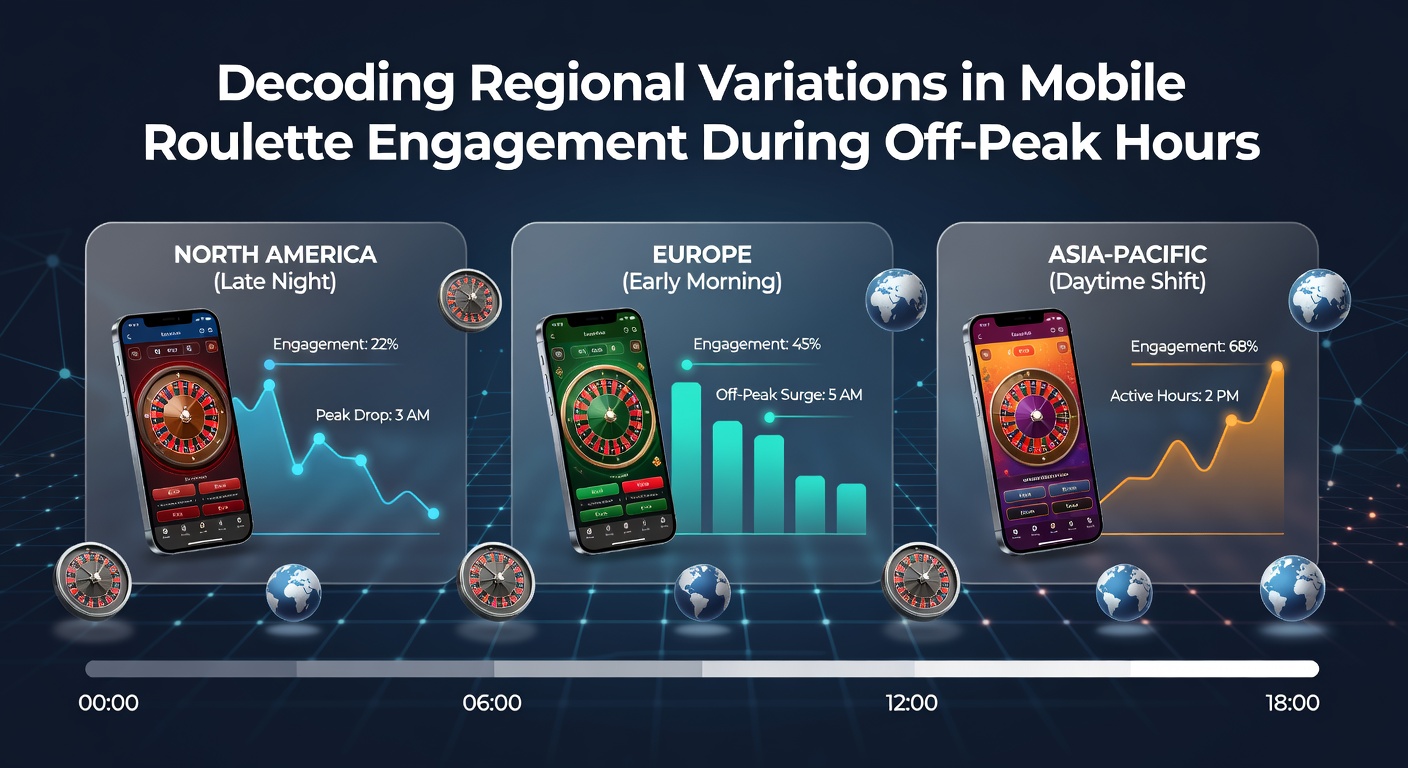
Decoding Regional Variations in Mobile Roulette Engagement During Off-Peak Hours
Mobile roulette continues to attract users at all hours yet engagement patterns shift noticeably once peak evening traffic subsides. Observers track these quieter windows, often between 2 a.m. and 8 a.m. local time or during weekday mid-mornings, because they expose how time zones, work schedules, and regulatory environments shape player habits. Data collected through platform analytics shows clear differences between North American, European, and Asia-Pacific markets when activity dips below average daily thresholds.Defining Off-Peak Windows Across Time Zones
Operators define off-peak periods by comparing hourly session volumes against weekly averages, and researchers adjust those baselines for each region. In the United States, for instance, activity falls sharply after 1 a.m. Eastern Time on Tuesdays and Wednesdays while Pacific-coast users remain active slightly later because of the three-hour difference. European markets experience their lowest traffic between 4 a.m. and 7 a.m. Central European Time, whereas players in Singapore and Hong Kong show reduced engagement from 3 a.m. to 6 a.m. local time. These staggered windows mean global operators must monitor multiple clocks simultaneously to identify true lulls.
North American Patterns During Quiet Hours
Users in the United States and Canada tend to favor shorter roulette sessions when most of the population sleeps. Platform logs indicate average session length drops by roughly twenty-two percent compared with prime-time play, yet bet sizes per spin often remain stable. State-level data released in May 2026 from the Nevada Gaming Control Board revealed that mobile roulette traffic in regulated markets held steady during early-morning hours even as overall casino app usage declined. Many players appear to treat these periods as low-pressure opportunities to test new wheel strategies without competing against large crowds in live lobbies.
European Engagement Trends
Across the European Union mobile roulette activity during off-peak hours reveals a different rhythm. Observers note that participants in Mediterranean countries extend sessions longer than their Northern European counterparts, possibly because warmer climates encourage later bedtimes. Figures released by the Malta Gaming Authority in early 2026 showed that roulette volumes between 5 a.m. and 7 a.m. increased four percent year-over-year in southern member states while northern markets recorded a slight dip. Regulatory frameworks that permit 24-hour access without mandatory cooling-off prompts contribute to these sustained engagement levels.
What's interesting is how language preferences also surface during quieter times. French and Italian interfaces see higher retention rates after midnight than German or Dutch versions, suggesting cultural comfort influences who stays online when fewer players are present.
Asia-Pacific Contrasts
Markets in Australia and parts of Southeast Asia display still another profile. Australian users frequently log in during early weekday mornings before work, and data from the Australian Communications and Media Authority indicates mobile roulette accounts for a larger share of total gaming revenue in those hours than in evening blocks. In contrast, players in Japan and South Korea show sharp cutoffs after 2 a.m. because of strict local curfew norms around online gaming. These regional distinctions become especially visible when operators overlay heat maps from multiple jurisdictions.

Factors Driving the Differences
Several elements combine to produce these variations. Network latency, local payment processing hours, and even weather patterns affect whether users choose mobile roulette when overall demand is low. In regions where mobile data remains expensive after midnight, engagement drops more steeply than in markets with flat-rate plans. Cultural attitudes toward gambling also play a role; societies that treat roulette as entertainment rather than high-stakes activity maintain steadier off-peak numbers.
Take one analyst who reviewed twelve months of anonymized session data and discovered that promotional timing aligned with regional off-peak windows lifted participation without increasing average wager amounts. The same study highlighted that push notifications sent at 5 a.m. local time performed better in Australia than identical messages delivered at the same universal time in Europe.
Measurement Methods and Recent Findings
Operators rely on timestamped event logs, device geolocation, and session-duration metrics to quantify engagement. When these datasets are normalized for population size and regulatory access, clear geographic signatures emerge. Research published by the University of Nevada, Reno gaming research center in May 2026 confirmed that mobile roulette retention during off-peak hours correlates strongly with smartphone penetration rates and the density of 5G coverage rather than with traditional casino proximity.
Those who've studied cross-border player behavior know that time-zone arbitrage also influences results. A player in Tokyo can join a European wheel during that market's quiet period while local users sleep, creating micro-peaks inside global off-peak windows. Platforms that segment traffic by both geography and clock time capture these nuances more accurately than those using single worldwide averages.
Conclusion
Regional variations in mobile roulette engagement during off-peak hours reflect a combination of time zones, infrastructure, regulations, and cultural rhythms. Data gathered through 2026 continues to show that uniform global strategies miss important local signals. Operators who adjust interface language, promotional timing, and responsible-gaming prompts according to each market's quiet periods record more consistent session volumes across the full twenty-four-hour cycle. Continued monitoring of these patterns will help platforms refine offerings without assuming every region follows the same clock.