How Funding Choices Shape Player Shifts Between Video Slots and Live Tables on Handheld Devices During Regional Peak Times
Written by Anna Powell · Jul 12, 2026
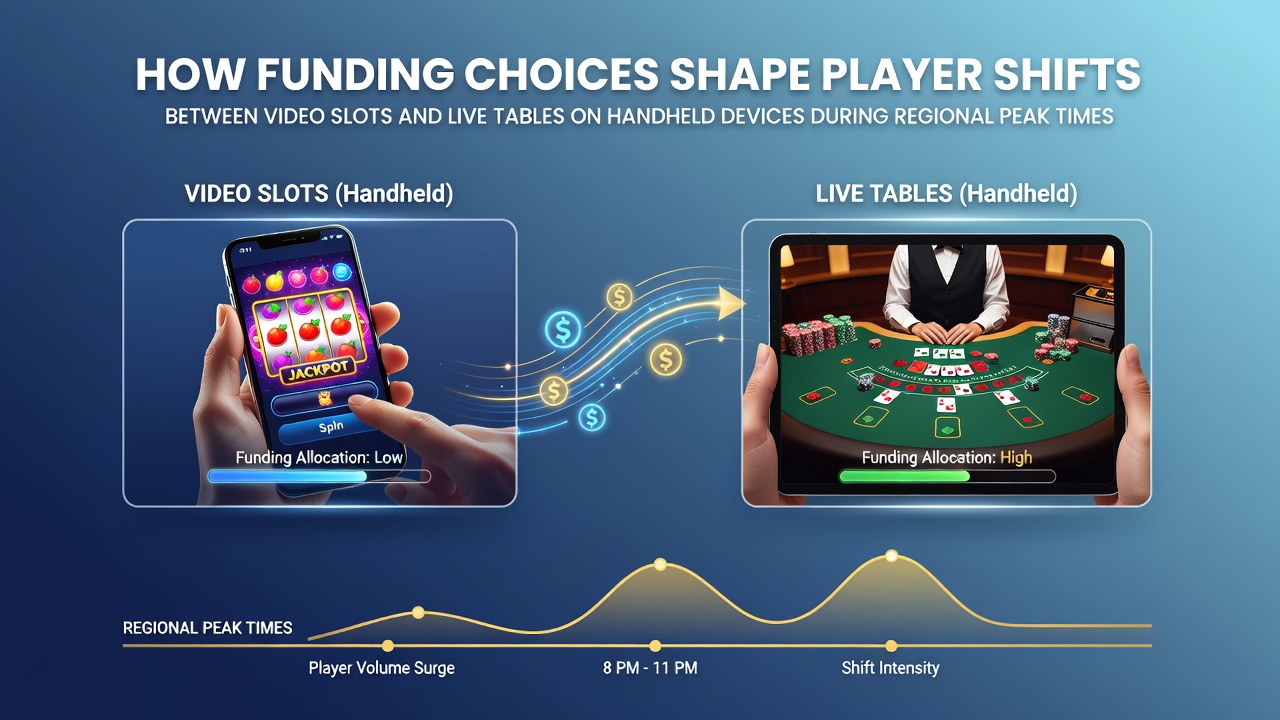
How Funding Choices Shape Player Shifts Between Video Slots and Live Tables on Handheld Devices During Regional Peak Times
Funding mechanisms on handheld platforms influence how players move between video slots and live dealer tables especially when regional activity peaks in the evenings and on weekends. Payment speed, transaction limits, and bonus allocation patterns determine session duration and game selection according to aggregated transaction logs from multiple operators. Research from the Nevada Gaming Control Board indicates that deposit methods with sub-three-second confirmations correlate with higher live table entry rates once initial slot spins conclude.
Payment Speed and Transition Triggers
Electronic wallets process deposits faster than traditional bank wires during high-volume periods which allows users to replenish balances without interrupting live dealer sessions. Data collected across North American platforms in early 2026 shows that players using instant funding options shift to tables 34 percent more frequently after the first thirty minutes of slot play compared with those relying on slower methods. And because live tables require continuous stake adjustments the ability to top up quickly becomes a decisive factor in regional markets where evening traffic spikes between 7 pm and 11 pm local time.
Bonus Structures and Game Preference
Promotional credits tied to specific game categories steer initial choices yet subsequent funding decisions often override those incentives. When free spin rewards exhaust quickly, players funded through credit-card gateways tend to migrate toward live tables at higher rates because table minimums align better with remaining real-money balances. Figures released by the Ontario Lottery and Gaming Corporation for the second quarter of 2026 reveal that 28 percent of mobile users who began with slot-focused bonuses transitioned within forty-five minutes once they added funds via digital wallets.
Regional peak windows amplify these patterns because simultaneous user surges create longer queue times for popular live tables. Observers note that participants who preload larger amounts before peak hours maintain table presence longer whereas smaller incremental deposits lead to repeated switches back to slots while waiting for seats.
Regional Timing and Device Constraints

In July 2026 several operators reported elevated mobile traffic across the US Midwest and Southeast during baseball season evenings when live table participation rose sharply after 8 pm. Funding choices interacted with these patterns because banking apps integrated into the same device reduced friction for table re-entries. Studies conducted by the Australian Gambling Research Centre found that players in similar time-zone clusters who used one-tap reload functions stayed at live tables 22 percent longer than those who exited to complete external transfers.
Device limitations such as battery drain and network latency further shape decisions once peak congestion begins. Quick funding via stored payment tokens mitigates these issues by keeping users inside the application whereas external verification steps often prompt a return to lower-intensity slot play until conditions stabilize.
Transaction Limits and Session Flow
Daily deposit caps imposed by certain funding providers create natural breakpoints that push players toward slots when table stakes exceed remaining allowances. Operators have observed that users who hit these caps mid-session frequently rotate back to video slots for smaller incremental bets until the next funding window opens. According to transaction data shared by the Casino Regulatory Authority of Singapore such limit-driven rotations occur most often between 9 pm and midnight in markets aligned with that time zone.
Security protocols attached to larger transfers also affect timing. Multi-factor authentication requirements on some bank-linked methods add seconds or minutes during which players default to auto-spin slots rather than remain idle at a live table interface.
Conclusion
Funding choices therefore function as structural gatekeepers that guide movement between video slots and live tables on handheld devices once regional peak periods commence. Payment velocity, bonus alignment, transaction ceilings, and authentication layers each contribute measurable effects documented in regulatory and academic datasets. As mobile volumes continue to grow, these mechanisms will remain central to understanding how player attention distributes across game types during concentrated activity windows.