How Regional Time Zones Shape Engagement Patterns in Digital Table Game Sessions Across Different Platforms
Written by Anna Powell · Jul 1, 2026

How Regional Time Zones Shape Engagement Patterns in Digital Table Game Sessions Across Different Platforms
Regional time zones create distinct rhythms in how players interact with digital table games, and these patterns emerge clearly when analysts examine data from major platforms that host blackjack, roulette, and poker sessions. Observers note that servers record higher login volumes during evening hours in each local zone, yet the overlap between time zones produces secondary peaks when users from Asia connect with those in Europe or the Americas join sessions already underway.
Mapping Activity Across Continents
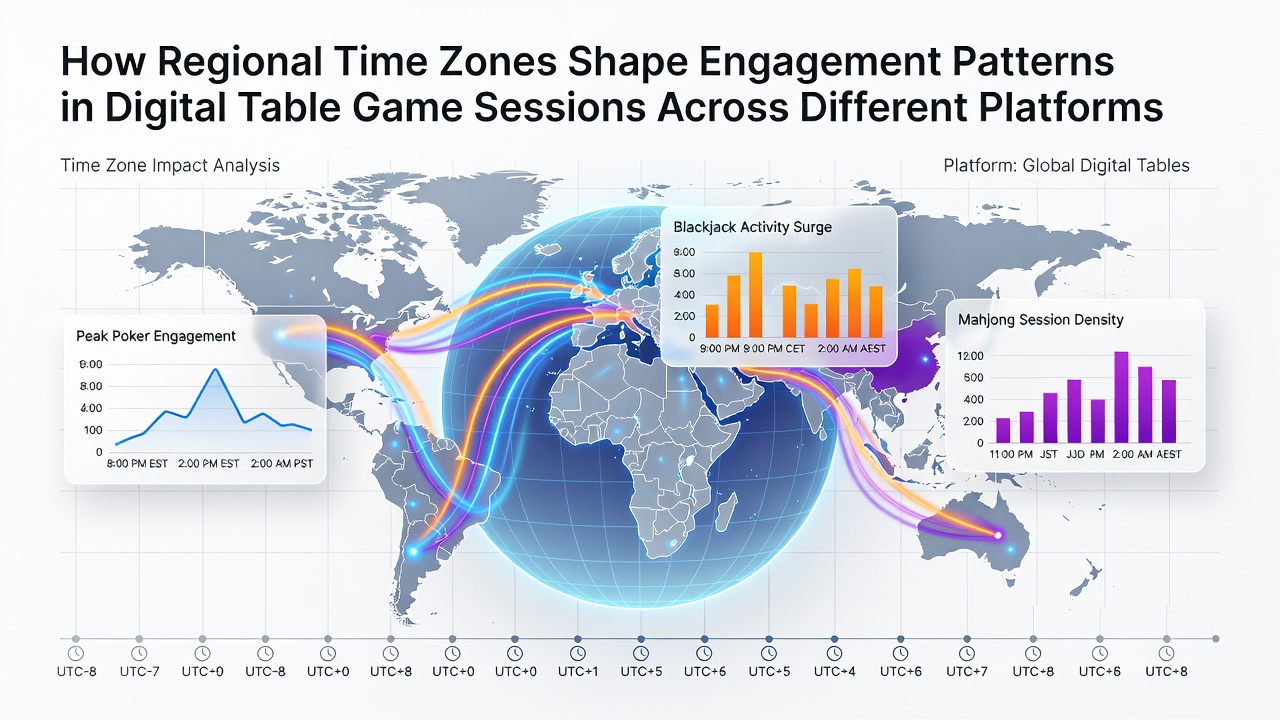
Platforms track session starts by converting all timestamps to coordinated universal time, which allows researchers to isolate the effects of local clocks on player behavior. Data shows that users in the Asia-Pacific region often begin table game rounds between 8 p.m. and midnight local time, while participants in the Eastern United States show comparable activity between 7 p.m. and 11 p.m. Eastern Daylight Time, and these windows shift by several hours when daylight saving adjustments occur in spring and autumn.
European markets display a different cadence because many countries observe Central European Summer Time, and analysts have recorded sustained engagement from 6 p.m. onward that continues past midnight when overlapping with later Asian sessions. The same servers record lower traffic during early morning hours in any single zone, yet cross-zone participation keeps certain tables active around the clock on both desktop clients and mobile applications.
Platform Differences in Time-Sensitive Engagement
Desktop platforms tend to attract longer sessions during prime local evening hours because players access them from fixed locations, whereas mobile apps register more frequent but shorter logins during commuting periods that align with afternoon time zones in major cities. Researchers discovered that push notifications timed to local peaks increase return rates by measurable margins, and operators adjust these alerts according to the dominant time zone of each user cohort rather than applying a uniform schedule.
Live dealer interfaces add another layer since studios operate in specific physical locations, and players in distant zones join streams that run on studio time. One study revealed that participants from the Pacific time zone log in more consistently when tables open during their late afternoon, while those in the Middle East prefer sessions that start after local dinner hours even if the studio clock shows morning.
Regional Data and Regulatory Context
Figures from the Nevada Gaming Control Board indicate that digital table game traffic originating from Pacific and Mountain time zones accounts for a substantial share of monthly activity, with spikes coinciding with evening hours in those regions during July 2026 reporting periods. Similar patterns appear in records maintained by the Australian Communications and Media Authority, where eastern states show pronounced activity aligned with Australian Eastern Standard Time and western regions follow a later schedule.
Industry organizations such as the European Gaming and Betting Association have compiled reports showing that cross-border participation increases when platforms synchronize tournament start times with multiple time zones simultaneously, and these coordinated events produce higher average session durations than single-zone offerings. Observers note that mobile users in particular switch between games more often when their local clock enters the typical evening window, whereas desktop sessions remain steadier once initiated.
Adjustments by Operators and Technology
Operators respond to these documented patterns by staggering tournament schedules and bonus releases according to aggregated time zone data rather than a single headquarters clock. Software updates now include automatic detection of device location, which allows the interface to highlight tables that historically attract players from overlapping regions during the user's current hour. Such adaptations maintain consistent traffic across the global network even as individual regions move through their daily cycles.
Conclusion
Regional time zones continue to influence engagement patterns in digital table game sessions through measurable shifts in login timing, session length, and platform preference. Data compiled by regulatory bodies and research groups demonstrates that operators who align features with these natural rhythms sustain broader participation across continents, and the ongoing refinement of scheduling tools reflects the persistent role of local clocks in shaping global activity.