Player Behavior Shifts in Digital Card Games Influenced by Instant Payout Options and Tiered Membership Perks
Written by Elena Perry · Aug 7, 2026
Player Behavior Shifts in Digital Card Games Influenced by Instant Payout Options and Tiered Membership Perks
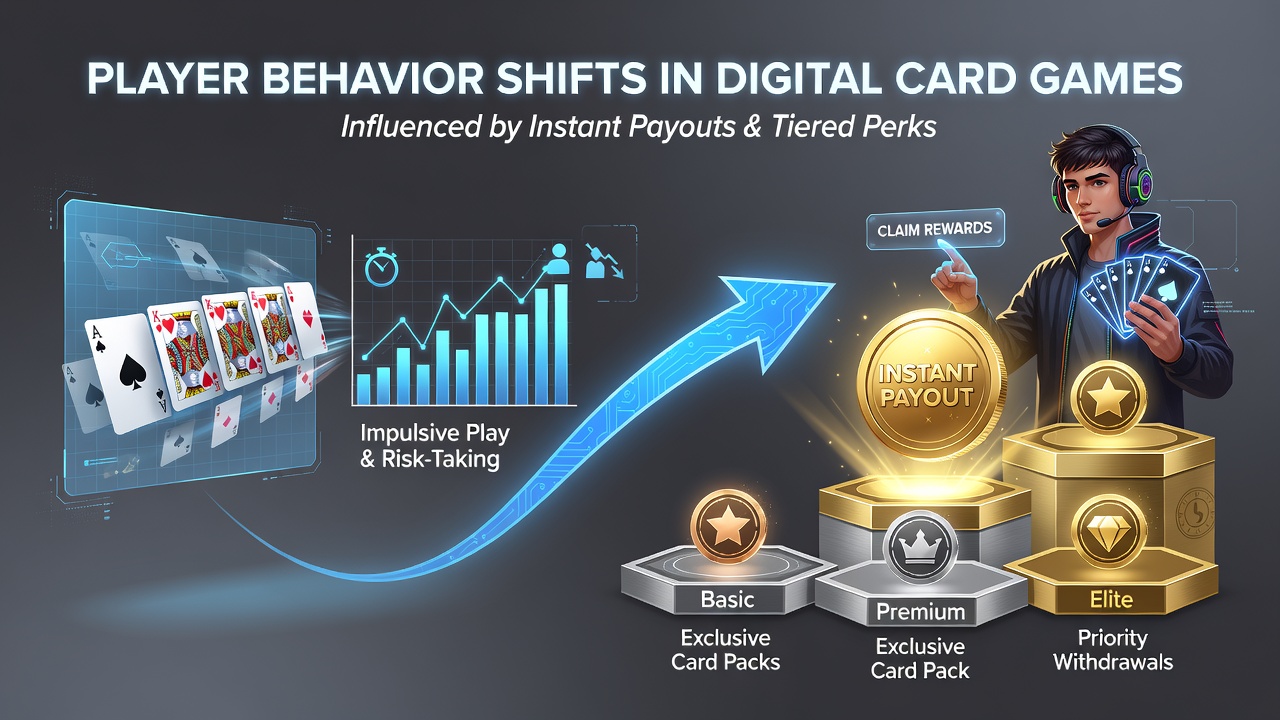
Data from multiple gaming platforms indicate that instant payout options have altered session lengths and risk thresholds among digital card game participants since early 2025, while tiered membership structures continue to shape retention patterns through August 2026. Researchers tracking user metrics across poker and blackjack applications report that withdrawal processing times under 30 seconds correlate with increased re-deposit rates within the same hour, according to aggregated platform logs analyzed by industry analysts.
Instant Payout Mechanics and Session Dynamics
Platforms offering same-minute fund transfers see players complete more hands per hour when balances update immediately after wins, because funds remain available without external banking delays. Studies compiled by the American Gaming Association show a 22 percent rise in consecutive session starts among accounts using instant options compared with those relying on standard processing windows of 24 to 72 hours. Observers note that participants adjust bet sizing upward after quick credits appear, since the barrier between cashing out and resuming play shrinks considerably.
Yet withdrawal speed alone does not dictate all changes. Platform telemetry reveals that users who activate instant options also log shorter average breaks between rounds, reducing idle time that previously allowed reflection on bankroll management. This pattern holds across both mobile and desktop environments, with data sets from North American operators confirming the trend persists through mid-2026.
Tiered Membership Structures and Engagement Layers
Membership tiers granting escalating rewards such as reduced rake, priority seating, and bonus credit multipliers influence how long players remain in specific game types. Higher tiers often receive customized table invitations and accelerated loyalty point accumulation, which platform records link to elevated play frequency among those users. A report issued by the Canadian Gaming Association documents that tier advancement thresholds, when paired with visible progress trackers, increase weekly active days by an average of 1.8 across studied cohorts.
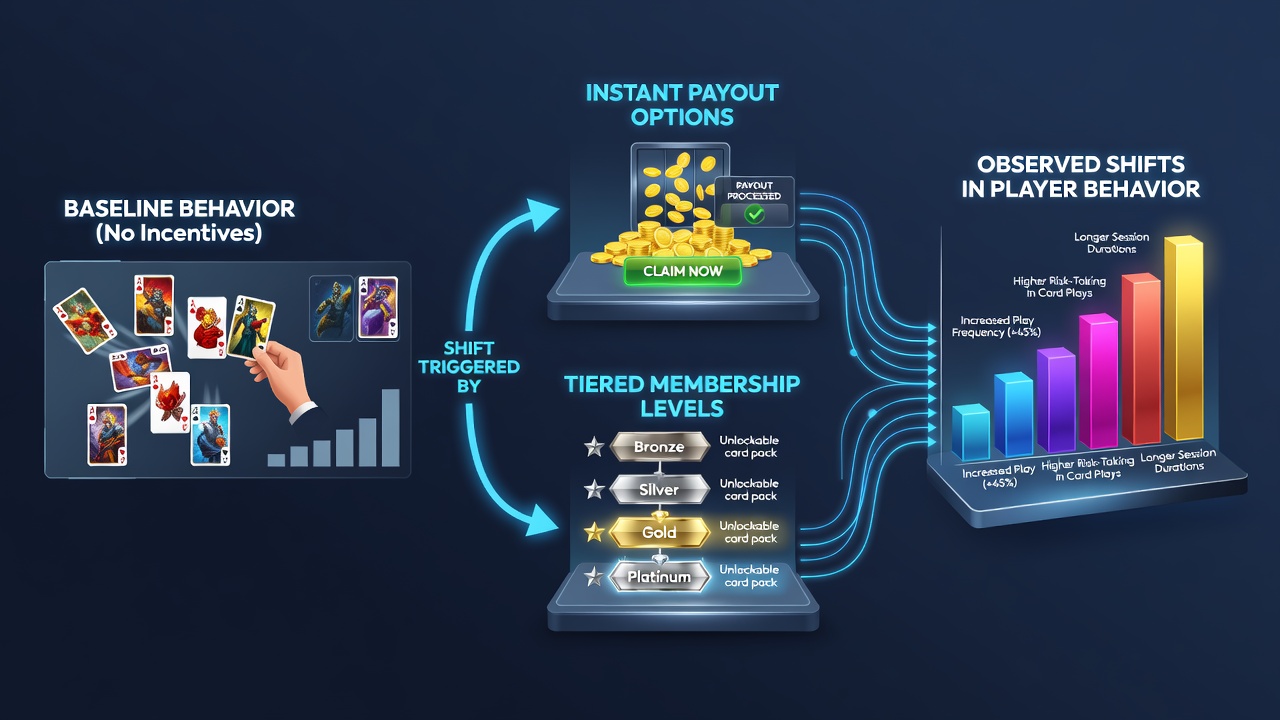
Lower-tier participants exhibit different responses. They tend to migrate toward games offering quicker payout confirmation to accelerate progress toward the next level, according to user flow analyses conducted on major European-licensed sites. The combination produces measurable clustering around certain table stakes, where instant settlement and perk visibility intersect most directly.
Combined Effects on Game Selection and Retention
When instant payouts and tier benefits operate together, retention curves flatten for extended periods. Longitudinal data covering 18 months ending August 2026 indicate that accounts reaching mid-tier status while using instant options maintain 34 percent higher month-over-month activity than comparable accounts lacking either feature. Game transition habits also shift, with participants moving between cash games and tournaments more fluidly once membership perks offset entry fees or provide rakeback credits.
Regulatory filings from the Nevada Gaming Control Board further illustrate these patterns through anonymized transaction summaries that operators submit quarterly. The filings highlight increased cross-game movement among loyalty program members who receive instant settlement confirmations, suggesting the features jointly reduce friction that once prompted players to exit after a single variant session.
Regional Data Variations Through 2026
Australian market reports compiled by state gaming authorities show similar directional changes, though the magnitude differs because local payout regulations impose minimum verification steps even for instant options. Participants in those jurisdictions still demonstrate elevated return rates after quick credits, yet overall session volume growth remains moderated compared with less restricted markets. European operators reporting to national oversight bodies record parallel outcomes tied to tiered reward visibility.
These variations underscore that payout speed and membership structures interact with local rules to produce distinct behavioral signatures rather than uniform global effects.
Conclusion
Platform data collected through August 2026 establish clear correlations between instant payout availability, tiered membership incentives, and measurable adjustments in digital card game participation. Session frequency, bet sizing patterns, and game transition rates all reflect the presence of these features, while regional regulatory differences continue to modulate the scale of observed shifts. Continued monitoring by operators and oversight agencies will track whether these trends stabilize or evolve further as technology and program designs advance.