Prediction Markets Leave States and Tribes Short More Than a Billion Dollars in Tax Revenue
Written by Anna Powell · May 29, 2026

Prediction Markets Leave States and Tribes Short More Than a Billion Dollars in Tax Revenue
The American Gaming Association released findings showing that states and Native American tribes have missed out on more than one billion dollars in potential tax revenue because prediction markets such as those run by Kalshi and Polymarket fall under federal oversight through the Commodity Futures Trading Commission rather than state licensing frameworks, and the AGA pointed to ongoing litigation along with proposed tax measures in Kentucky, Iowa, and Pennsylvania while noting that sports-related contracts account for the bulk of trading activity.
How Federal Oversight Shifts Revenue Away from States
Prediction markets operate as platforms where users trade on the outcomes of events, and because the CFTC holds regulatory authority over these contracts, operators avoid the patchwork of state taxes that apply to traditional gaming and sports betting, which means revenue that would normally flow into state coffers instead stays with the platforms or the federal system, and data from the AGA report places the cumulative shortfall above the one-billion-dollar mark across multiple jurisdictions that have active or proposed gambling frameworks.
Litigation and Legislative Responses Taking Shape
States have responded with court challenges aimed at clarifying whether prediction markets can continue to operate outside local taxation, while lawmakers in Kentucky have advanced proposals that would impose taxes on these contracts, and similar measures have surfaced in Iowa and Pennsylvania where officials seek to capture a share of the activity that currently bypasses their systems, and these efforts reflect a broader pattern where jurisdictions attempt to align prediction market revenue with existing gaming tax structures.
Sports Contracts Drive the Majority of Activity
Trading volume on these platforms shows heavy concentration in sports-related contracts, which the AGA report identifies as the dominant category, and this concentration amplifies the revenue impact because sports betting already represents a major taxable segment in states that license it directly, yet the federal route allows the same activity to proceed without those contributions, and observers tracking the sector note that this imbalance has prompted renewed focus on legislative fixes.
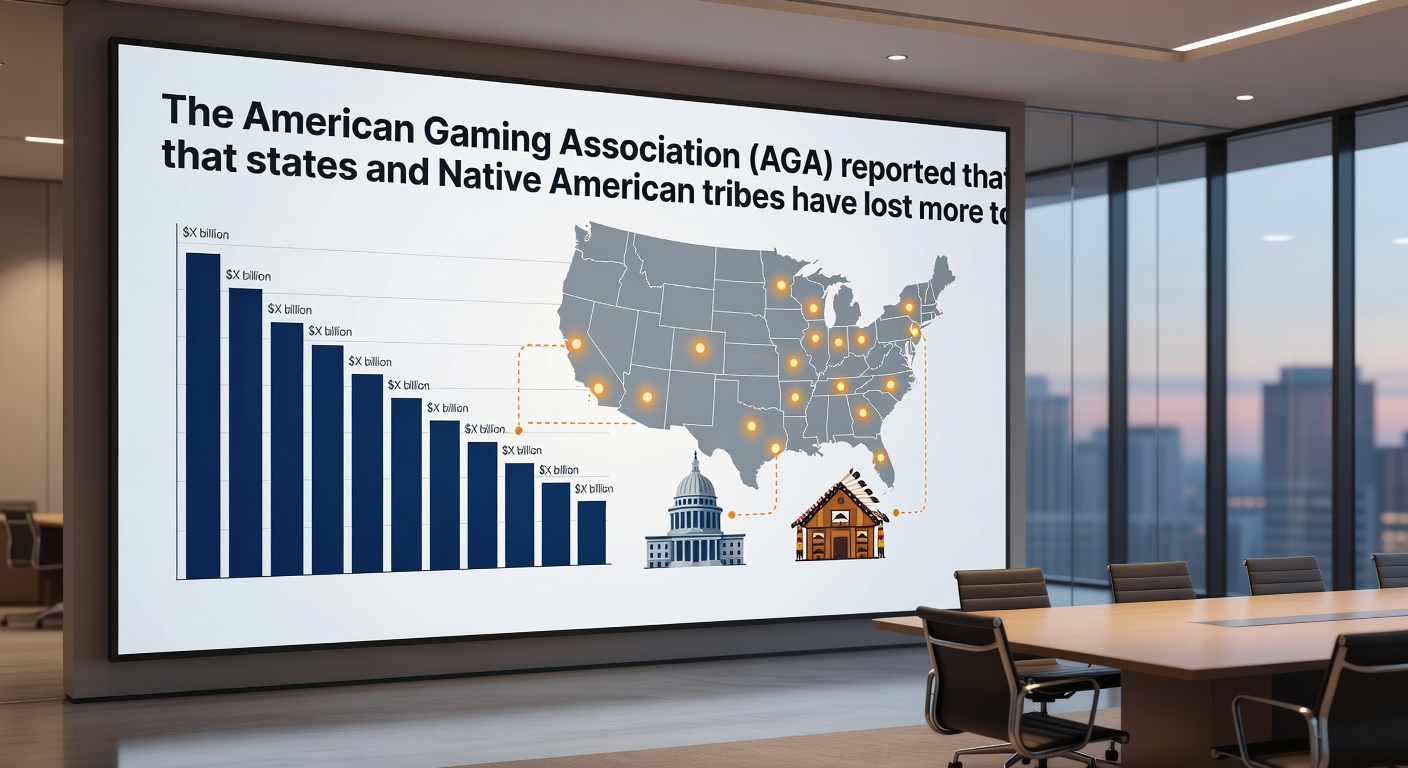
A live tracker of lost tax revenue from prediction markets provides ongoing updates on the scale of the shortfall, and the figures continue to climb as trading activity expands, which keeps the issue in front of state attorneys general and tribal gaming commissions that rely on gaming taxes to fund public programs and tribal services.
Impact on Tribal Gaming Operations
Native American tribes face a parallel challenge because many operate gaming facilities under compacts that include revenue-sharing agreements with states, and when prediction markets draw activity away from those facilities or from state-licensed sportsbooks, the tribes lose both direct and indirect tax streams, and the AGA report underscores that this effect compounds across regions where tribal casinos form a significant portion of the regulated gaming landscape.
Proposed Tax Measures Offer Potential Pathways
In Pennsylvania, discussions have centered on extending existing sports wagering taxes to cover prediction market contracts, while Iowa lawmakers have explored similar extensions that would require operators to register and remit payments even though federal CFTC rules currently govern their core functions, and Kentucky's proposals include provisions that would treat certain event contracts as taxable wagers under state law, and these targeted approaches aim to close the gap without requiring a full overhaul of federal regulations.
Broader Context of State and Federal Regulatory Tension
The tension between state-level gaming control and federal derivatives oversight has existed since the CFTC first asserted jurisdiction over event contracts, and the current revenue figures illustrate how that division plays out in practice, while the AGA continues to monitor court cases that could redefine the boundaries and force operators to address state tax obligations directly, and those cases remain active across multiple jurisdictions as the industry grows.
Conclusion
The AGA findings make clear that prediction markets regulated solely at the federal level have created a measurable revenue gap for states and tribes, and the combination of litigation plus proposed taxes in Kentucky, Iowa, and Pennsylvania represents the primary avenues for addressing the shortfall, while sports contracts remain the leading driver of volume on these platforms, and continued tracking of the data will show whether legislative or judicial actions succeed in redirecting a portion of that activity back into state and tribal tax systems.