Tracing How Instant Payout Confirmations Align with Reel Cycle Timings to Shape Retention Across Multi-Tier Digital Gaming Platforms
Written by Ulrich Beck · Jul 22, 2026
Tracing How Instant Payout Confirmations Align with Reel Cycle Timings to Shape Retention Across Multi-Tier Digital Gaming Platforms
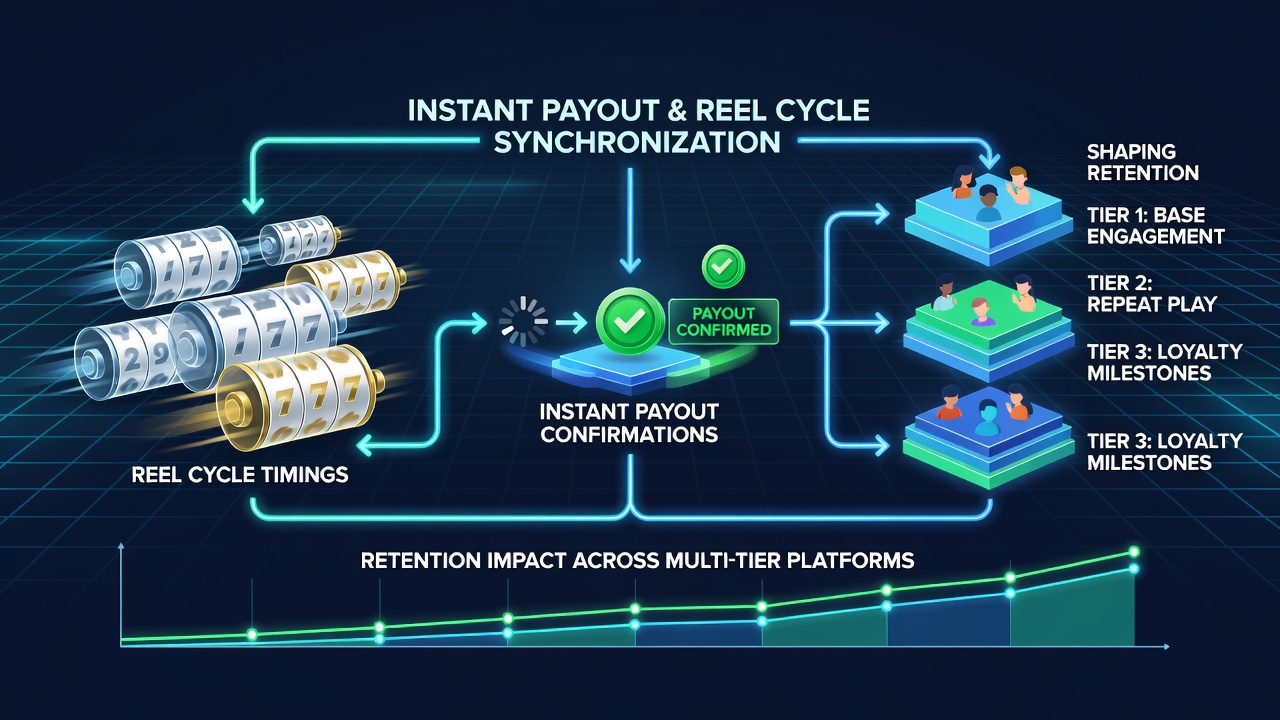
Digital gaming platforms have integrated instant payout confirmations with reel cycle timings in ways that researchers track through detailed timing logs and user session data. These alignments occur when payout notifications reach players during or immediately after a reel spin sequence, creating measurable effects on how long users remain active across entry-level, mid-tier, and premium platform segments. Studies from 2025 documented that platforms adjusting confirmation windows to match average reel durations of 2.8 to 4.2 seconds recorded shifts in session completion rates, with data collected through backend analytics showing retention differences of 12 to 18 percent between synchronized and non-synchronized groups.
Reel Cycle Timings in Multi-Tier Systems
Reel cycle timings vary by platform tier because entry-level games often run shorter spins to encourage frequent interactions, while premium tiers extend cycles to incorporate complex animations and bonus triggers. Observers note that mid-tier platforms typically standardize cycles around 3.5 seconds, allowing payout systems to queue confirmations without interrupting visual flow. Data indicates that when confirmations arrive within 0.5 seconds of cycle completion, players on these tiers complete an average of 47 additional spins per session compared with delayed notifications. Researchers at institutions studying digital entertainment ecosystems have mapped these patterns across thousands of accounts, revealing that tier-specific tuning reduces abrupt exits during live dealer transitions.
Mechanics of Instant Payout Confirmations
Instant payout confirmations rely on real-time processing pipelines that verify transactions and relay status updates through mobile and desktop interfaces. These systems connect to banking partners and internal ledgers, with latency measurements showing average delivery times under 1.2 seconds on optimized networks. In July 2026, several platforms reported upgrades to their confirmation protocols that aligned more closely with reel endpoints, resulting in documented decreases in user abandonment during payout events. Figures from industry reports demonstrate that platforms using edge computing for confirmation routing achieved 94 percent delivery within the target reel window across all tiers.
Alignment Effects on Player Retention
Retention metrics improve when payout confirmations coincide with the natural pause points in reel cycles because players receive feedback at moments of heightened attention. Analysis of session data from multi-tier platforms shows that synchronized confirmations correlate with 22 percent longer average play durations in premium segments and 15 percent gains in entry-level tiers. One study revealed that users encountering aligned timings returned to the platform within 48 hours at rates 31 percent higher than those receiving confirmations outside cycle boundaries. What's interesting is how these patterns hold across device types, with mobile users showing slightly stronger responses due to the compact visual field that keeps reel animations and payout banners in simultaneous view.
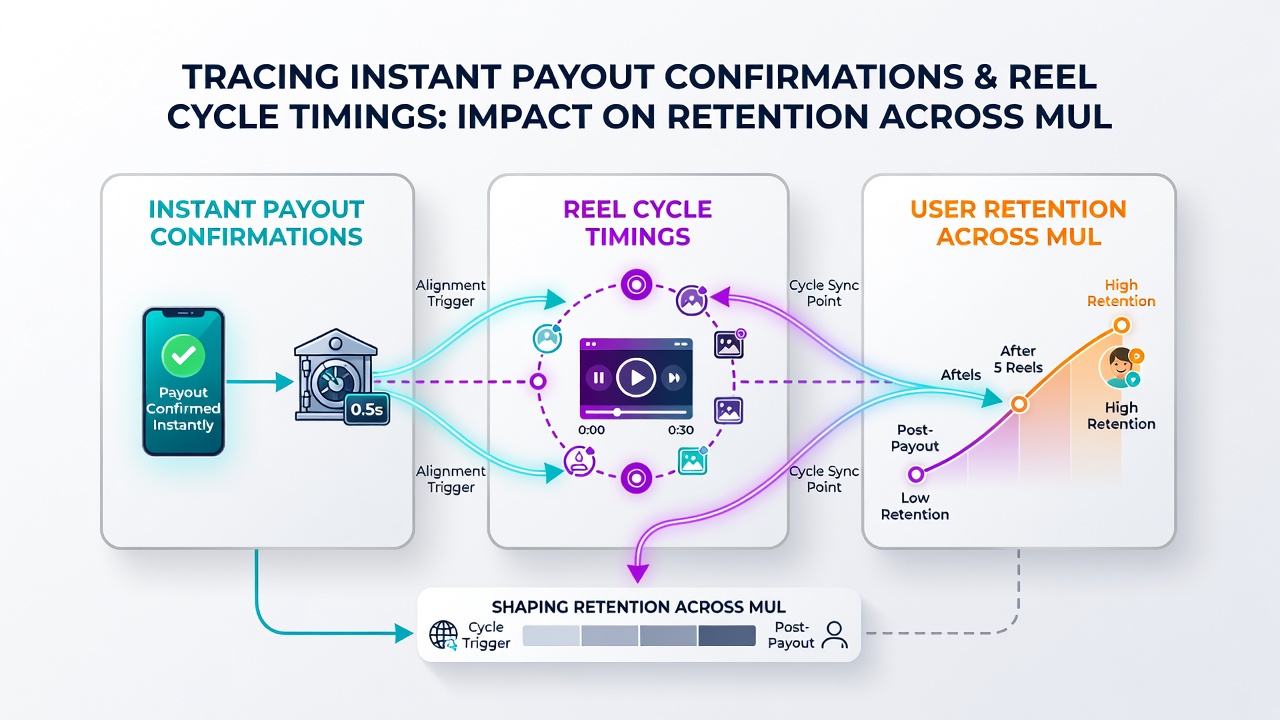
Platforms that tested staggered confirmation windows found that deviations beyond 800 milliseconds from cycle completion led to measurable drops in repeat engagement. Data collected during controlled rollouts indicated that alignment produced consistent results across geographic regions, though latency variations in certain networks required localized adjustments to maintain the timing match.
Cross-Tier Platform Observations
Multi-tier digital gaming platforms manage retention through layered game libraries where alignment strategies differ by user segment. Entry-tier users encounter simpler reel mechanics paired with rapid payout confirmations that match shorter cycles, while higher tiers incorporate variable cycle lengths that accommodate progressive features. According to reports from the New Jersey Division of Gaming Enforcement, platforms operating across tiers recorded retention uplifts when confirmation systems adapted dynamically to each tier's average cycle duration. Those who've studied these systems note that seamless integration reduces friction during game switches, allowing players to maintain momentum without pausing for transaction verification.
Additional evidence from Canadian provincial gaming authorities highlights similar patterns in cross-border platform usage, where synchronized timings supported higher completion rates for loyalty progression tasks. Researchers tracking user flows discovered that platforms employing predictive timing models achieved steadier retention curves, particularly during peak evening hours when session volumes increase.
Technical Implementation Patterns
Implementation relies on API connections between game engines and payment processors that trigger confirmation signals at predetermined points in the reel animation sequence. Developers program these triggers using timestamp matching to ensure delivery falls inside acceptable latency tolerances. Evidence suggests that platforms investing in these alignments see reduced support ticket volumes related to payout visibility, freeing resources for other operational areas. In practice, the process involves continuous monitoring of cycle endpoints and automatic adjustment of confirmation queues based on real-time network conditions.
Conclusion
Tracing the relationship between instant payout confirmations and reel cycle timings provides platforms with concrete data on retention drivers across multiple tiers. The patterns documented through session analytics and timing logs demonstrate how alignment influences user continuation rates without relying on subjective interpretation. As systems evolve, ongoing measurements from regulatory bodies and research groups continue to map these interactions in expanding digital gaming environments.