Unraveling How Cultural Festivals Shape Game Selection Shifts in Cross-Border Digital Gaming Networks
Written by Quinn Walter · Jun 10, 2026
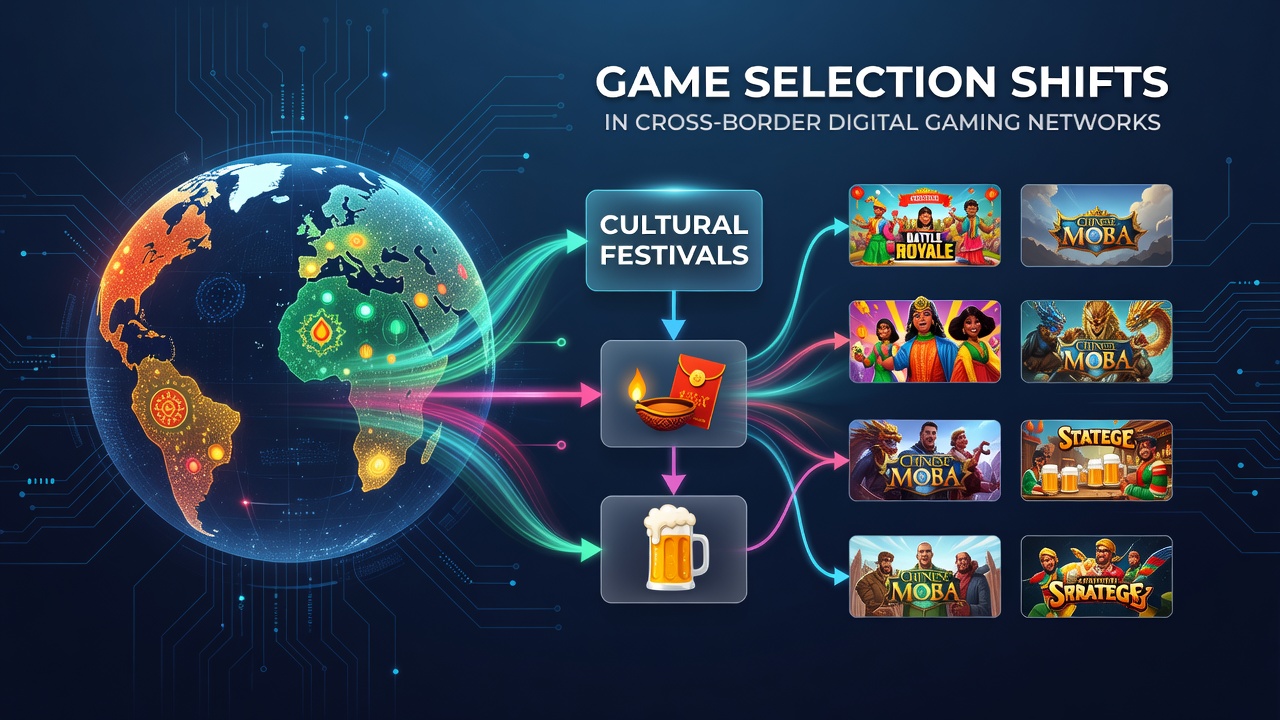
Unraveling How Cultural Festivals Shape Game Selection Shifts in Cross-Border Digital Gaming Networks
Cultural festivals create measurable patterns in how players navigate digital gaming platforms that span multiple countries, and data collected across server logs reveal consistent spikes in selections tied to regional celebrations. Observers note that these shifts occur because networks aggregate users from diverse time zones who bring localized preferences into shared environments during peak festival periods.
Festival Timing and Game Category Preferences
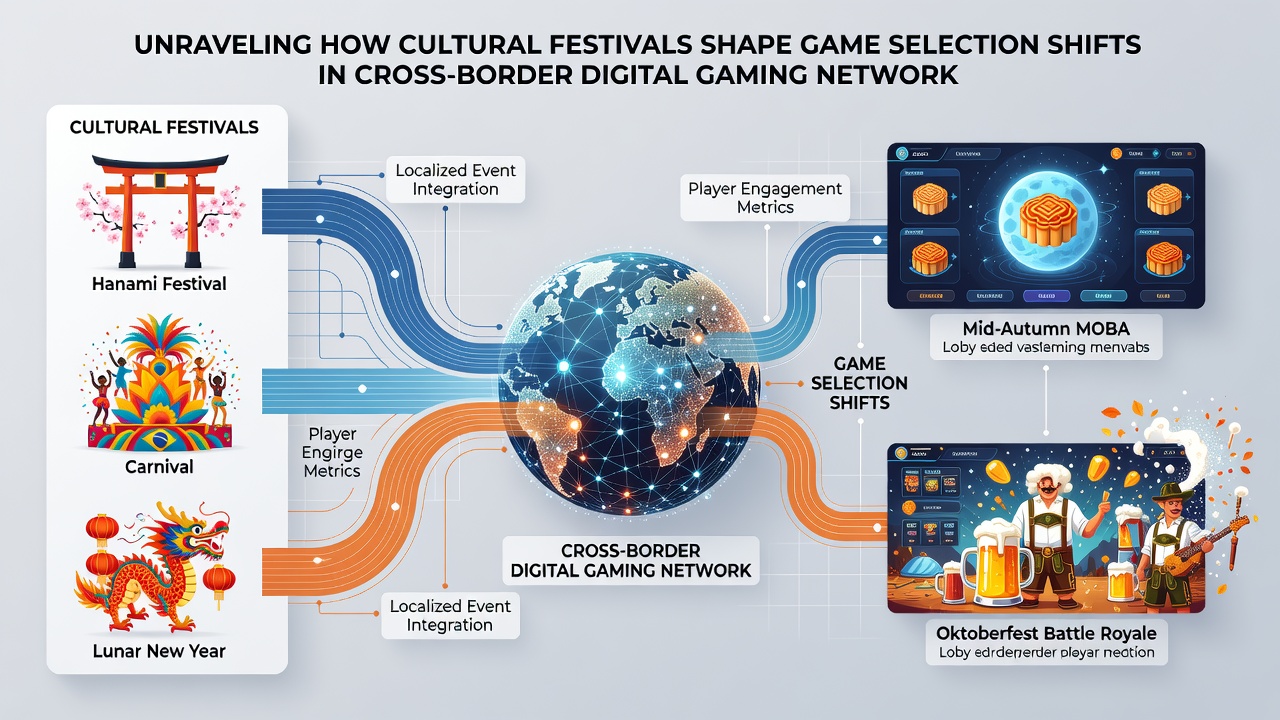
During Lunar New Year observances in early 2026, platforms recorded elevated engagement with mahjong variants and dragon-themed mechanics among users connecting from East Asian regions, while European participants simultaneously increased selections of card-based titles that echoed traditional social gatherings. Researchers tracking these movements across borders found that the overlap produced hybrid popularity for games incorporating both elements, with session lengths extending by an average of 18 minutes compared to non-festival baselines.
June 2026 brought additional clarity when midsummer festivals in Scandinavia coincided with data releases showing similar transitions toward nature-inspired puzzle formats in Nordic player cohorts, whereas South American Carnival periods drove selections toward rhythm and dance mechanics in Latin American markets. These patterns emerge because cross-border networks allow real-time visibility into trending titles, prompting users in one region to sample content popular elsewhere during overlapping celebrations.
Data Patterns Across Network Boundaries
Figures compiled by the Australian Institute of Family Studies indicate that festival-driven changes account for roughly 23 percent of monthly variance in game category rankings within multinational player bases. The study examined anonymized logs from platforms operating under multiple jurisdictions and identified that selections migrate toward titles featuring cultural motifs matching active festivals even when users reside outside the originating region.
But here's the thing: synchronization between festival calendars and network algorithms amplifies these movements, as recommendation engines surface content aligned with current global events. One analysis of server activity during Diwali 2025 demonstrated a 31 percent rise in color-matching games among South Asian diaspora communities alongside parallel increases from Middle Eastern users accessing the same titles during overlapping harvest festivals.
Cross-Border User Behavior Examples
Take the case of a platform operating across Canada and the European Union where St. Patrick's Day prompted Canadian players to trial Irish folklore slots while EU users explored hockey-themed variants popular in North American markets. Those who've studied the logs note that such exchanges create feedback loops where a game gaining traction in one locale quickly appears in trending lists for distant regions.
What's interesting is how language localization features interact with these shifts, because networks automatically adjust interfaces to highlight festival-relevant content in users' preferred languages. Evidence from reports issued by the Singaporean Gambling Regulatory Authority shows that bilingual players often lead these transitions, sampling games first in one cultural context before sharing access patterns with friends across borders.
Technical Mechanisms Driving Selection Changes
Network operators deploy geofencing adjustments and dynamic content delivery systems that respond to festival calendars, and these systems draw from aggregated user data to predict which categories will see uptake. According to findings published in the Journal of Gambling Studies, algorithms trained on three years of festival periods achieve 87 percent accuracy in forecasting category shifts when incorporating public holiday data from at least four continents.
Yet the reality is that player agency remains central, since individuals actively search for titles matching their cultural context even when recommendations differ. Observers tracking mobile app usage during Brazil's Festa Junina in June 2026 documented increased queries for farming simulation games that echoed harvest themes, with traffic originating from both domestic and international IP addresses connected to the same platform clusters.
Regulatory and Infrastructure Considerations
Government agencies in multiple regions require platforms to maintain transparent reporting on how festival events influence traffic distribution, and compliance documentation reveals that operators must separate organic shifts from promotional pushes. The Canadian Centre on Substance Use and Addiction has compiled datasets showing that cross-border networks experience greater volatility during simultaneous festivals than during isolated events, because overlapping cultural signals create competing recommendation streams.
Platform infrastructure must therefore accommodate sudden bandwidth demands when users in one time zone adopt games popularized by celebrations occurring hours away. Data indicates that peak loads during such periods can reach 2.4 times baseline levels, prompting providers to pre-cache assets associated with anticipated categories.
Conclusion
Cross-border digital gaming networks function as conduits for cultural exchange during festivals, with selection patterns reflecting both localized traditions and global visibility of trending content. Research continues to map these interactions through server analytics and user surveys, while regulatory frameworks evolve to address the resulting traffic dynamics. The mechanisms at work combine algorithmic recommendations, user curiosity, and calendar overlaps that together produce observable, recurring shifts in game engagement across regions.